
Webb Telescope sees galaxy in mysteriously clearing fog of early Universe
A key goal of the NASA/ESA/CSA James Webb Space Telescope has been to see further than ever before into the distant past of our Universe, when the first galaxies were forming after the Big Bang, a period know as cosmic dawn.
Researchers studying one of those very early galaxies have now made a discovery in the spectrum of its light, that challenges our established understanding of the Universe’s early history. Their results are reported in the journal Nature.
Webb discovered the incredibly distant galaxy JADES-GS-z13-1, observed at just 330 million years after the Big Bang. Researchers used the galaxy’s brightness in different infrared filters to estimate its redshift, which measures a galaxy’s distance from Earth based on how its light has been stretched out during its journey through expanding space.
The NIRCam imaging yielded an initial redshift estimate of 12.9. To confirm its extreme redshift, an international team led by Dr Joris Witstok, previously of the University of Cambridge’s Kavli Institute for Cosmology, observed the galaxy using Webb’s Near-Infrared Spectrograph (NIRSpec) instrument.
The resulting spectrum confirmed the redshift to be 13.0. This equates to a galaxy seen just 330 million years after the Big Bang, a small fraction of the Universe’s present age of 13.8 billion years.
But an unexpected feature also stood out: one specific, distinctly bright wavelength of light, identified as the Lyman-α emission radiated by hydrogen atoms. This emission was far stronger than astronomers thought possible at this early stage in the Universe’s development.
“The early Universe was bathed in a thick fog of neutral hydrogen,” said co-author Professor Roberto Maiolino from Cambridge’s Kavli Institute for Cosmology. “Most of this haze was lifted in a process called reionisation, which was completed about one billion years after the Big Bang.
“GS-z13-1 is seen when the Universe was only 330 million years old, yet it shows a surprisingly clear, telltale signature of Lyman-α emission that can only be seen once the surrounding fog has fully lifted. This result was totally unexpected by theories of early galaxy formation and has caught astronomers by surprise.”
Before and during the epoch of reionisation, neutral hydrogen fog surrounding galaxies blocked any energetic ultraviolet light they emitted, much like the filtering effect of coloured glass. Until enough stars had formed and were able to ionise the hydrogen gas, no such light — including Lyman-α emission — could escape from these fledgling galaxies to reach Earth.
The confirmation of Lyman-α radiation from this galaxy has great implications for our understanding of the early Universe. “We really shouldn’t have found a galaxy like this, given our understanding of the way the Universe has evolved,” said co-author Kevin Hainline from the University of Arizona. “We could think of the early Universe as shrouded with a thick fog that would make it exceedingly difficult to find even powerful lighthouses peeking through, yet here we see the beam of light from this galaxy piercing the veil.”
The source of the Lyman-α radiation from this galaxy is not yet known, but it may include the first light from the earliest generation of stars to form in the Universe. “The large bubble of ionised hydrogen surrounding this galaxy might have been created by a peculiar population of stars — much more massive, hotter and more luminous than stars formed at later epochs, and possibly representative of the first generation of stars,” said Witstok, who is now based at the Cosmic Dawn Center at the University of Copenhagen. A powerful active galactic nucleus, driven by one of the first supermassive black holes, is another possibility identified by the team.
The team plans further follow-up observations of GS-z13-1, aiming to obtain more information about the nature of this galaxy and origin of its strong Lyman-α radiation. Whatever the galaxy is concealing, it is certain to illuminate a new frontier in cosmology.
JWST is an international partnership between NASA, ESA and the Canadian Space Agency (CSA). The data for this result were captured as part of the JWST Advanced Deep Extragalactic Survey (JADES).
Reference:
Joris Witstok et al. ‘Witnessing the onset of reionization through Lyman-α emission at redshift 13.’ Nature (2025). DOI: 10.1038/s41586-025-08779-5
Adapted from an ESA media release.
Astronomers have identified a bright hydrogen emission from a galaxy in the very early Universe. The surprise finding is challenging researchers to explain how this light could have pierced the thick fog of neutral hydrogen that filled space at that time.
This result was totally unexpected by theories of early galaxy formation and has caught astronomers by surpriseRoberto MaiolinoESA/Webb, NASA, STScI, CSA, JADES CollaborationJADES-GS-z13-1 in the GOODS-S field
The text in this work is licensed under a Creative Commons Attribution-NonCommercial-ShareAlike 4.0 International License. Images, including our videos, are Copyright ©University of Cambridge and licensors/contributors as identified. All rights reserved. We make our image and video content available in a number of ways – on our main website under its Terms and conditions, and on a range of channels including social media that permit your use and sharing of our content under their respective Terms.
Thriving Antarctic ecosystems found following iceberg calving
An international team of scientists have uncovered a thriving underwater ecosystem off the coast of Antarctica that had never before been accessible to humans.
The team, including researchers from the University of Cambridge, were working in the Bellingshausen Sea off the coast of Antarctica when a massive iceberg broke away from the George VI Ice Shelf in January of this year.
The team, on board Schmidt Ocean Institute’s R/V Falkor (too), changed their plans and reached the newly exposed seafloor 12 days later, becoming the first to investigate the area.
Their expedition was the first detailed study of the geology, physical oceanography, and biology beneath such a large area once covered by a floating ice shelf. The A-84 iceberg was approximately 510 square kilometres (209 square miles) in size, and revealed an equivalent area of seafloor when it broke away from the ice shelf.
"We seized upon the moment, changed our expedition plan, and went for it so we could look at what was happening in the depths below," said expedition co-chief scientist Dr Patricia Esquete from the University of Aveiro, Portugal. "We didn't expect to find such a beautiful, thriving ecosystem. Based on the size of the animals, the communities we observed have been there for decades, maybe even hundreds of years.”
Using Schmidt Ocean Institute’s remotely operated vehicle, ROV SuBastian, the team observed the deep seafloor for eight days and found flourishing ecosystems at depths as great as 1300 meters.
Their observations include large corals and sponges supporting an array of animal life, including icefish, giant sea spiders, and octopus. The discovery offers new insights into how ecosystems function beneath floating sections of the Antarctic ice sheet.
Little is known about what lies beneath Antarctica’s floating ice shelves. In 2021, British Antarctic Survey researchers first reported signs of bottom-dwelling life beneath the Filchner-Ronne ice shelf in the Southern Weddell Sea. The current expedition was the first to use an ROV to explore this remote environment.
The team was surprised by the significant biomass and biodiversity of the ecosystems and suspect they have discovered several new species.
Deep-sea ecosystems typically rely on nutrients from the surface slowly raining down to the seafloor. However, these Antarctic ecosystems have been covered by 150-meter-thick ice for centuries, completely cut off from surface nutrients. Ocean currents also move nutrients, and the team hypothesizes that currents are a possible mechanism for sustaining life beneath the ice sheet. The precise mechanism fuelling these ecosystems is not yet understood.
The newly exposed Antarctic seafloor also allowed the team, with scientists from Portugal, the United Kingdom, Chile, Germany, Norway, New Zealand, and the United States, to gather critical data on the past behaviour of the larger Antarctic ice sheet. The ice sheet has been shrinking and losing mass over the last few decades due to climate change.
“The ice loss from the Antarctic Ice Sheet is a major contributor to sea level rise worldwide,” said expedition co-chief scientist Sasha Montelli of University College London (UCL). “Our work is critical for providing longer-term context of these recent changes, improving our ability to make projections of future change — projections that can inform actionable policies. We will undoubtedly make new discoveries as we continue to analyse this data.”
“We were thrilled by the opportunity to explore the newly exposed seafloor,” said team member Dr Svetlana Radionovskaya from Cambridge’s Department of Earth Sciences. “The research will provide key insights into ice sheet dynamics, oceanography and sub-ice shelf ecosystems. At a time when the West Antarctic Ice Sheet is melting at an alarming rate, understanding these dynamics and their impacts is crucial.”
In addition to collecting biological and geological samples, the team used autonomous underwater vehicles called gliders to study the impacts of glacial meltwater on the region's physical and chemical properties. Preliminary data suggest high biological productivity and a strong meltwater flow from the George VI ice shelf.
The expedition was part of Challenger 150, a global cooperative focused on deep-sea biological research and endorsed by the Intergovernmental Oceanographic Commission of UNESCO (IOC/UNESCO) as an Ocean Decade Action.
“The science team was originally in this remote region to study the seafloor and ecosystem at the interface between ice and sea,” said Schmidt Ocean Institute Executive Director, Dr Jyotika Virmani. “Being right there when this iceberg calved from the ice shelf presented a rare scientific opportunity. Serendipitous moments are part of the excitement of research at sea – they offer the chance to be the first to witness the untouched beauty of our world.”
Svetlana Radionovskaya is a Junior Research Fellow at Queens’ College, Cambridge.
Adapted from a media release by the Schmidt Ocean Institute.
Scientists explore a seafloor area newly exposed by iceberg A-84; discover vibrant communities of ancient sponges and corals.
ROV SuBastian / Schmidt Ocean InstituteDeep-sea coral at a depth of 1200 metres
The text in this work is licensed under a Creative Commons Attribution-NonCommercial-ShareAlike 4.0 International License. Images, including our videos, are Copyright ©University of Cambridge and licensors/contributors as identified. All rights reserved. We make our image and video content available in a number of ways – on our main website under its Terms and conditions, and on a range of channels including social media that permit your use and sharing of our content under their respective Terms.
University spin-out secures funding to improve AI energy efficiency and bandwidth
CamGraPhIC - co-founded Professor Andrea Ferrari, Director of the Cambridge Graphene Centre, and Dr Marco Romagnoli of CNIT in Italy - is developing new types of photonic circuits for energy-efficient, high-bandwidth, optical interconnect technology.is developing new types of photonic circuits for energy-efficient, high-bandwidth, optical interconnect technology.
The investment will support continued innovation in graphene photonics transceivers, a technology that could improve energy efficiency, reduce latency, and increase bandwidth for artificial intelligence (AI) and cellular data transmission.
With the investment, CamGraPhIC will enhance its research and development capabilities and establish a pilot manufacturing line. The facility will demonstrate a scalable mass production process compatible with commercial semiconductor and photonics foundries.
The funding round was co-led by CDP Venture Capital, NATO Innovation Fund, Sony Innovation Fund, and Join Capital, with participation from Bosch Ventures, Frontier IP Group plc, and Indaco Ventures.
CamGraPhIC’s graphene-based transceivers provide a viable, stable, and scalable alternative to current silicon-based photonics. These transceivers deliver higher bandwidth density, and exceptional latency performance, while consuming 80% less energy than traditional pluggable data centre optical transceivers.
The company say their innovation is particularly effective for transferring large volumes of data between graphic processing units (GPUs) and high bandwidth memory (HBM), which are fundamental to generative AI and high-performance computing.
The transceivers operate efficiently across a broad temperature range, eliminating the need for complex and costly cooling systems. Thanks to a simplified device architecture enabled by the integration of graphene into the photonic structure, these transceivers are also more cost-effective to manufacture.
Thanks to this funding, CamGraPhIC will expand to applications in avionics, automotive advanced driver-assistance systems (ADAS), and space, where rugged, high-performance transceivers offer significant technical and commercial advantages over existing technologies.
“We are thrilled for this new phase in the journey towards commercialisation of CamGraPhIC groundbreaking and energy efficient devices, to speed up development of AI hardware, without impacting global emissions,” said Ferrari. “Having Sony, Bosch and NATO as shareholders and board members will help focus the work towards the most relevant applications, including defence and security.”
“With the backing of renowned investors, we are excited to propel towards commercialisation the Graphene Photonics technology to overcome the interconnection bottleneck of regenerative AI processing systems and driving the next leap in scaling bandwidth and reducing energy consumption for the future of optical data communications, ” said Romagnoli, former Head of Research Sector - Advanced Technologies for Photonic Integration of the Pisa National Inter-University Consortium for Telecommunications (CNIT), and now Chief Scientific Officer of CamGraPhIC.
A University of Cambridge spin-out company working to improve AI efficiency and bandwidth has raised €25 million in new funding.
CamGraPhICMarco Romagnoli (L) and Andrea Ferrari (R)
The text in this work is licensed under a Creative Commons Attribution-NonCommercial-ShareAlike 4.0 International License. Images, including our videos, are Copyright ©University of Cambridge and licensors/contributors as identified. All rights reserved. We make our image and video content available in a number of ways – on our main website under its Terms and conditions, and on a range of channels including social media that permit your use and sharing of our content under their respective Terms.
Cambridge leads top three universities for number of new spinouts
The Spotlight on Spinouts 2025 report, produced by the Royal Academy of Engineering in collaboration with Beauhurst, analyses annual trends in UK spinouts. The University of Cambridge ranks second to Oxford for the number of spinouts created since 2011, with Imperial in third. However, in the last year, Cambridge has spun out 26 new companies, showing the largest increase in the number of spinouts among the top three.
According to the report, East of England spinouts secured 35.0% of total investment, leading all regions. The area hosted two of the top five spinout fundraisings in 2024, including a £450 million raise by Cambridge spinout, Bicycle Therapeutics. The South Cambridgeshire-based company develops cancer treatments, with the investment aimed at supporting its R&D efforts.
Dr Jim Glasheen, Chief Executive of Cambridge Enterprise, the University’s innovation arm, said: “This rapid increase in the number of spinouts coming out of Cambridge reflects our continued focus on accelerating Cambridge innovations as well as the impact of our newer initiatives, such as the Founders at the University of Cambridge programme and the Technology Investment Fund.”
Dr Diarmuid O’Brien, Pro-Vice-Chancellor for Innovation at the University of Cambridge added: “It’s heartening to see the growth in spinouts from Cambridge and across the sector as a whole. University entrepreneurship has an increasingly vital role to play in driving UK economic growth and addressing some of our most pressing societal challenges. As one of the world’s top science and tech clusters, Cambridge has a responsibility to deliver innovation-led economic growth for the UK and we have ambitious plans to further strengthen our capabilities in this regard.”
Read more about Cambridge spinouts in Cambridge Enterprise's Annual Review 2025
Of the UK’s top three universities for spinouts – Oxford, Cambridge and Imperial - Cambridge saw the most growth in 2024, according to a new report on trends in UK academic spinouts.
The text in this work is licensed under a Creative Commons Attribution-NonCommercial-ShareAlike 4.0 International License. Images, including our videos, are Copyright ©University of Cambridge and licensors/contributors as identified. All rights reserved. We make our image and video content available in a number of ways – on our main website under its Terms and conditions, and on a range of channels including social media that permit your use and sharing of our content under their respective Terms.
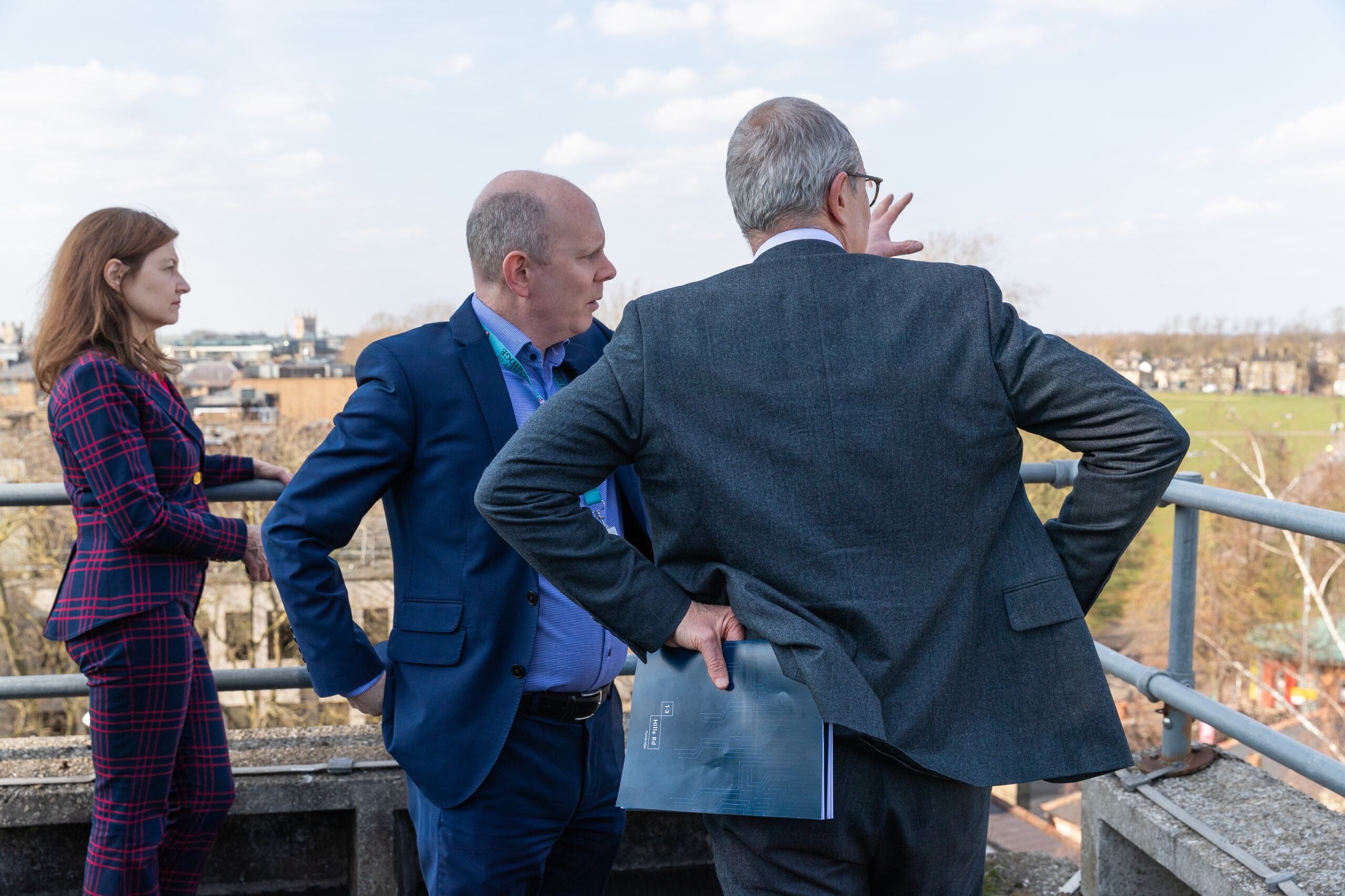
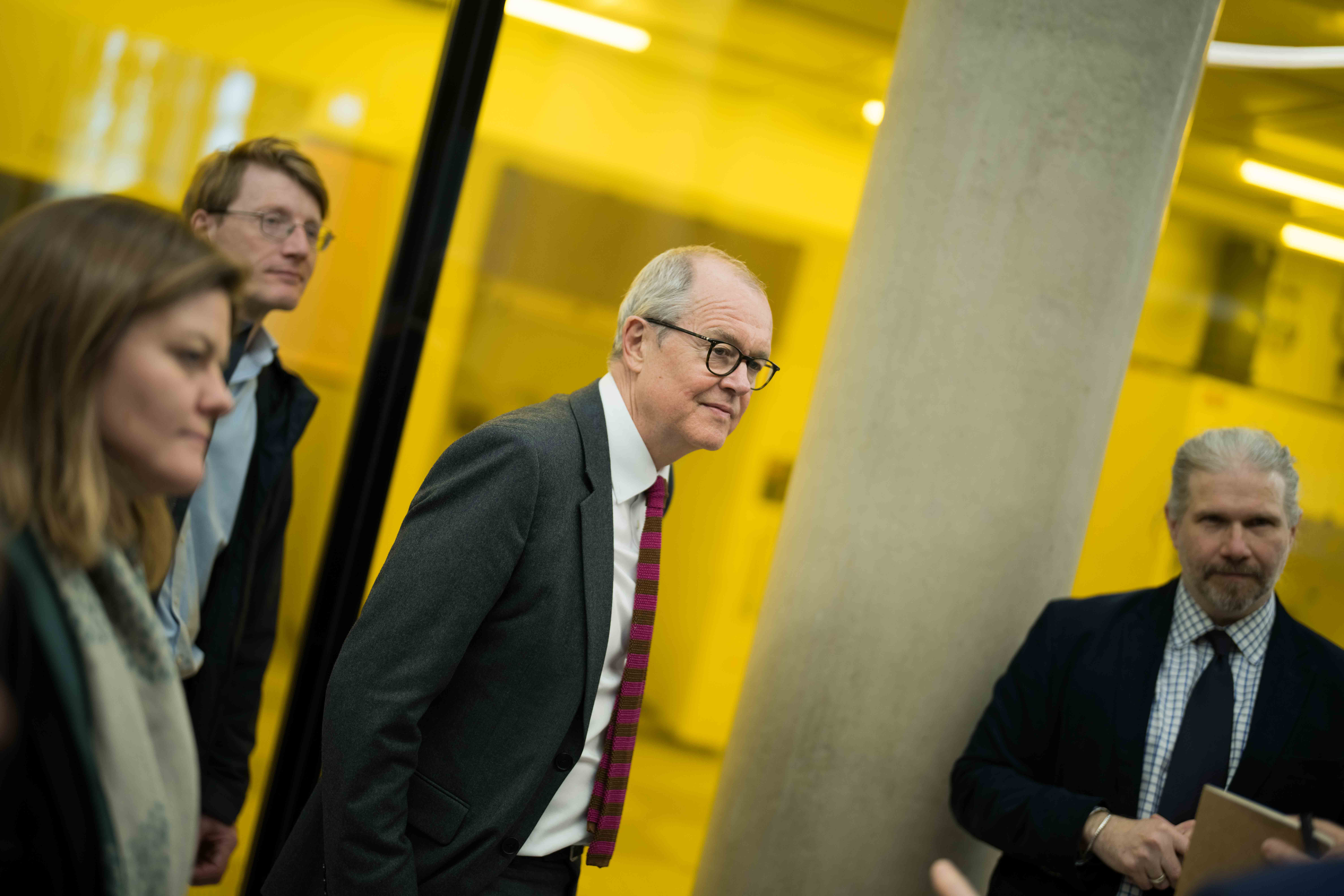
Lord Patrick Vallance, Science Minister and Oxford-Cambridge Innovation Champion, visits Cambridge
During his visit he saw the proposed city-centre site of Cambridge’s new flagship innovation hub, which was endorsed by the Chancellor Rachel Reeves earlier this year, and heard about plans for the space to support venture-backed, rapidly scaling companies. The hub will connect entrepreneurs, investors, and corporates, serving as the UK’s equivalent to Lab Central in Boston or Station F in Paris – a beacon for global talent and capital.
While he was in the city, the Minister unveiled Innovate Cambridge’s new Advisory Council. Featuring global tech and science pioneers, the Council will catalyse the Cambridge cluster’s potential to deliver substantial societal, environmental and economic benefits, and empower the city to become a global centre for responsible innovation.
He also spoke on BBC Radio 4’s PM programme about Cambridge’s role in the development of the Oxford-Cambridge Growth Corridor. In a special edition, the programme focused on government plans to boost UK science and technology growth by linking up the two cities to create new homes, infrastructure, leisure facilities, office and laboratory space.
As part of his visit, the Minister toured the Cambridge West Innovation District, the transformative project that will allow industry to co-locate at scale with the University’s world-leading academic community. Once complete, the campus is expected to employ 14,000 people and will be the leading location in Europe for AI, quantum and climate research.
At the West Hub, a publicly accessible multi-purpose facility, Lord Vallance met with local authority leaders from across the region. He then toured the site and saw key research locations including the Whittle Laboratory, home to the UK’s Integrated Technology Accelerator for zero-carbon flight, and the Computer Lab, a long-standing driver of tech spinouts.
Visiting the Cavendish Laboratory (Department of Physics), he heard about the impact of industry collaboration with major companies like Hitachi and ARM, and the role that the Department’s new state-of-the-art facilities will play in setting the stage for a new era of scientific discovery in areas such as ‘green tech’ – including long-lasting batteries – next-generation ICT devices, and quantum healthcare technology.”
The visit concluded with a roundtable discussion, where senior representatives from across Cambridge’s innovation ecosystem discussed ways to accelerate company growth, attract global talent, and secure new foreign direct investment – delivering growth which will benefit the whole UK.
Lord Vallance said: "The Oxford and Cambridge Corridor is a world-leading, high-growth, innovation cluster and we need to harness the opportunities that innovators are coming up with here. By backing our strengths in the Corridor, we can boost economic growth across the country, unlocking up to £78 billion for our economy, and deliver on our Plan for Change."
Professor Deborah Prentice, Vice-Chancellor of the University of Cambridge, said: "Cambridge is a mature innovation ecosystem spanning many high-growth sectors, including AI, technology, and life sciences. By working with the government and other partners, we can accelerate our impact even further, unlock the amazing potential of University research and innovation, and help drive UK growth."
Science Minister and Oxford-Cambridge Innovation Champion, Lord Patrick Vallance, visited Cambridge to see how the world’s most intensive science and technology cluster can drive economic growth.
The Oxford and Cambridge Corridor is a world-leading, high-growth, innovation cluster and we need to harness the opportunities that innovators are coming up with here. Lord Patrick Vallance, Science MinisterFrom left, Dr Diarmuid O'Brien, Lord Patrick Vallance, and Professor Deborah Prentice at the proposed innovation hub site.
The text in this work is licensed under a Creative Commons Attribution-NonCommercial-ShareAlike 4.0 International License. Images, including our videos, are Copyright ©University of Cambridge and licensors/contributors as identified. All rights reserved. We make our image and video content available in a number of ways – on our main website under its Terms and conditions, and on a range of channels including social media that permit your use and sharing of our content under their respective Terms.
Fully AI driven weather prediction system could start revolution in forecasting
The system, Aardvark Weather, has been supported by the Alan Turing Institute, Microsoft Research and the European Centre for Medium Range Weather Forecasts. It provides a blueprint for a new approach to weather forecasting with the potential to transform current practices. The results are reported in the journal Nature.
“Aardvark reimagines current weather prediction methods offering the potential to make weather forecasts faster, cheaper, more flexible and more accurate than ever before, helping to transform weather prediction in both developed and developing countries,” said Professor Richard Turner from Cambridge’s Department of Engineering, who led the research. “Aardvark is thousands of times faster than all previous weather forecasting methods.”
Current weather forecasts are generated through a complex set of stages, each taking several hours to run on powerful supercomputers. Aside from daily usage, the development, maintenance and use of these systems require significant time and large teams of experts.
More recently, research by Huawei, Google, and Microsoft has shown that one component of the weather forecasting pipeline, the numerical solver (which calculates how weather evolves over time), can be replaced with AI, resulting in faster and more accurate predictions. This combination of AI and traditional approaches is now being used by the European Centre for Medium Range Weather Forecasts (ECMWF).
But with Aardvark, researchers have replaced the entire weather prediction pipeline with a single, simple machine learning model. The new model takes in observations from satellites, weather stations and other sensors and outputs both global and local forecasts.
This fully AI driven approach means predictions that were once produced using many models – each requiring a supercomputer and a large support team to run – can now be produced in minutes on a desktop computer.
When using just 10% of the input data of existing systems, Aardvark already outperforms the United States national GFS forecasting system on many variables. It is also competitive with United States Weather Service forecasts that use input from dozens of weather models and analysis by expert human forecasters.
“These results are just the beginning of what Aardvark can achieve,” said first author Anna Allen, from Cambridge’s Department of Computer Science and Technology. “This end-to-end learning approach can be easily applied to other weather forecasting problems, for example hurricanes, wildfires, and tornadoes. Beyond weather, its applications extend to broader Earth system forecasting, including air quality, ocean dynamics, and sea ice prediction.”
The researchers say that one of the most exciting aspects of Aardvark is its flexibility and simple design. Because it learns directly from data it can be quickly adapted to produce bespoke forecasts for specific industries or locations, whether that's predicting temperatures for African agriculture or wind speeds for a renewable energy company in Europe.
This contrasts to traditional weather prediction systems where creating a customised system takes years of work by large teams of researchers.
“The weather forecasting systems we all rely on have been developed over decades, but in just 18 months, we’ve been able to build something that’s competitive with the best of these systems, using just a tenth of the data on a desktop computer,” said Turner, who is also Lead Researcher for Weather Prediction at the Alan Turing Institute.
This capability has the potential to transform weather prediction in developing countries where access to the expertise and computational resources required to develop conventional systems is not typically available.
“Unleashing AI’s potential will transform decision-making for everyone from policymakers and emergency planners to industries that rely on accurate weather forecasts,” said Dr Scott Hosking from The Alana Turing Institute. “Aardvark’s breakthrough is not just about speed, it’s about access. By shifting weather prediction from supercomputers to desktop computers, we can democratise forecasting, making these powerful technologies available to developing nations and data-sparse regions around the world.”
“Aardvark would not have been possible without decades of physical-model development by the community, and we are particularly indebted to ECMWF for their ERA5 dataset which is essential for training Aardvark,” said Turner.
“It is essential that academia and industry work together to address technological challenges and leverage new opportunities that AI offers,” said Matthew Chantry from ECMWF. “Aardvark’s approach combines both modularity with end-to-end forecasting optimisation, ensuring effective use of the available datasets."
“Aardvark represents not only an important achievement in AI weather prediction but it also reflects the power of collaboration and bringing the research community together to improve and apply AI technology in meaningful ways,” said Dr Chris Bishop, from Microsoft Research.
The next steps for Aardvark include developing a new team within the Alan Turing Institute led by Turner, who will explore the potential to deploy Aardvark in the global south and integrate the technology into the Institute’s wider work to develop high-precision environmental forecasting for weather, oceans and sea ice.
Reference:
Anna Allen, Stratis Markou et al. ‘End-to-end data-driven weather prediction.’ Nature (2025). DOI: 10.1038/s41586-025-08897-0
Adapted from a media release by The Alan Turing Institute
A new AI weather prediction system, developed by researchers from the University of Cambridge, can deliver accurate forecasts tens of times faster and using thousands of times less computing power than current AI and physics-based forecasting systems.
The Alan Turing InstituteProfessor Richard Turner using Aardvark Weather
The text in this work is licensed under a Creative Commons Attribution-NonCommercial-ShareAlike 4.0 International License. Images, including our videos, are Copyright ©University of Cambridge and licensors/contributors as identified. All rights reserved. We make our image and video content available in a number of ways – on our main website under its Terms and conditions, and on a range of channels including social media that permit your use and sharing of our content under their respective Terms.
Cambridge's Institute for Manufacturing launches 2025 UK Innovation Report
This year’s report analyses the UK’s innovation landscape, by benchmarking industrial sectors against global competitors and delivering key insights into the country’s strengths, challenges, and opportunities.
The report arrives at a particularly significant moment, with the UK Government placing industrial strategy at the core of its plans to deliver growth, emphasising investment, technology adoption, and high-growth sectors.
Recent national consultations on scale-up financing, technology adoption, and industrial strategy have highlighted the demand for stronger data and analysis to guide decision making.
The UK Innovation Report 2025 addresses this call by providing fresh data, deep insights, and expert perspectives to support informed policy making and strategic investment, which have significant implications for the UK's industrial strategy.
Key findings from this year’s report include:
- There has been a significant decline in the UK’s share of global manufacturing value-added, from 3.1% in 2000 to 1.9% in 2022
- The UK remains a global leader in government financial support for business R&D but lags in direct funding
- Skills mismatches persist, with 37% of UK workers feeling overqualified for their jobs
- The UK is a leading innovator in renewable energy technologies, ranking fourth in public R&D spending on low-carbon energy
- Compiled by policy experts from the University of Cambridge, the report provides an easy-to-navigate overview of key trends across UK industry.
You can read the full report here.
As the UK Government continues to develop its national industrial strategy, the Cambridge Industrial Innovation Policy group at Cambridge’s Institute for Manufacturing has unveiled the UK Innovation Report 2025.
The text in this work is licensed under a Creative Commons Attribution-NonCommercial-ShareAlike 4.0 International License. Images, including our videos, are Copyright ©University of Cambridge and licensors/contributors as identified. All rights reserved. We make our image and video content available in a number of ways – on our main website under its Terms and conditions, and on a range of channels including social media that permit your use and sharing of our content under their respective Terms.
Stormzy among eight nominated for honorary degrees
Michael Omari Owuo Junior, better known as Stormzy, will receive a Doctorate in Law in recognition of his philanthropic work and impact in a number of fields, including education, music, sport and literature. He launched his Scholarship programme at the University of Cambridge in 2018 funding two Black British students per year covering both their tuition fees and maintenance costs. Three years later, the programme was expanded after HSBC UK agreed to fund a further ten students per year. So far, 55 students have been supported by a Stormzy Scholarship and 2025 will see the largest group graduate so far. The ‘Stormzy Effect’ has been credited with being a contributor to an increase in applications to Cambridge from Black students across the UK.
An honorary Doctorate in Letters will be conferred upon the actor Sir Simon Russell Beale. Renowned for his stage, film and television roles, Sir Simon is an Honorary Fellow of Gonville and Caius College, where he studied for his undergraduate degree. He is the recipient of two BAFTA awards, three Laurence Olivier Awards and a Tony. He was knighted in 2019.
Professor Angela Davis, the political activist, philosopher and author, will also receive a Doctorate in Letters. A Distinguished Professor Emerita from the University of California, Santa Cruz, Professor Davis is a radical feminist thinker and prominent civil rights campaigner who was an active member of the Communist Party and champion of the prison abolition movement. She is a vocal advocate for LGBTQ+ rights.
Lady Arden of Heswall, former Justice of the UK’s Supreme Court, and an Honorary Fellow of Girton College, will receive a Doctorate in Law. She was previously a Judge in the Court of Appeal and before that, at the High Court of Justice, where she was the first female judge assigned to the Chancery Division. She is a former Chair of the Law Commission and a member of the Committee on Standards in Public Life. She was made a Privy Counsellor in 2000.
A Doctorate in Law will also be conferred on former Olympic rower and current chair of UK Sport, Dame Katherine Grainger. She is one of the most decorated British female Olympians and the only British woman to have won medals at five successive Olympic Games. In November, she was elected as the next chair of the British Olympic Association, the first woman to hold the post. She is currently Chancellor of the University of Glasgow.
The Nobel Prize-winning economist, Sir Oliver Hart, is to receive a Doctorate in Science. He is currently the Lewis P. and Linda L. Geyser University Professor at Harvard University. Hart’s work focuses on the theory of contracts, how parties can write better contracts, and on the social responsibility of business. He was knighted in the 2023 King’s Birthday Honours.
Professor Maria Leptin, President of the European Research Council, is to be conferred with a Doctorate in Medical Science. Formerly a Staff Scientist at the MRC Laboratory of Molecular Biology in Cambridge, she is a developmental biologist and immunologist she is best known for her work on the mechanisms that allow a developing body to take on its correct shape. She was formerly Director of the European Molecular Biology Organisation in Heidelberg.
Sir John Rutter is no stranger to Cambridge, being an Honorary Fellow at Clare College and Director of Music at the College from 1975 to 1979. A composer, arranger and conductor of choral music, his work has been performed all over the world. Founder and Director of the Cambridge Singers, Sir John, who was knighted in 2024, will receive a Doctorate in Music.
All eight distinguished individuals have accepted the University Council’s nomination to receive an honorary doctorate. Subject to final approval by the Regent House, the University’s governing body, they are now due to be admitted to their degrees at a special Congregation in the Senate-House on Wednesday 25th June, at which the University’s Vice-Chancellor, Professor Deborah Prentice, will preside and which will be attended by staff, students and alumni as well as specially invited guests.
Talented individuals from the world of science, music, drama, law, economics, sport and political activism are recognised in the list of distinguished people nominated for honorary degrees from the University of Cambridge this year.
The text in this work is licensed under a Creative Commons Attribution-NonCommercial-ShareAlike 4.0 International License. Images, including our videos, are Copyright ©University of Cambridge and licensors/contributors as identified. All rights reserved. We make our image and video content available in a number of ways – on our main website under its Terms and conditions, and on a range of channels including social media that permit your use and sharing of our content under their respective Terms.
Cambridge UK leaders explore Cambridge US innovation ecosystem
The tour included visits to CIC (Cambridge Innovation Center), Greentown Labs, LabCentral, The Engine, MassRobotics, and Harvard Innovation Labs - each playing a vital role in supporting technology startups and scientific enterprise.
The delegates met with entrepreneurs, investors, and research leaders to understand how these organisations facilitate the transition from cutting-edge research to commercial success. They observed how dedicated innovation hubs provide early-stage companies with access to lab space, venture funding, and corporate partnerships, creating an environment where ideas can rapidly develop into high-growth businesses.
The visit highlighted the impact of physical infrastructure in driving innovation. The Engine, for example, supports startups developing breakthrough technologies by offering 200,000 square feet of lab space, funding, and specialised resources. Greentown Labs, the largest climate tech incubator in North America, and LabCentral, a shared lab facility for biotech startups, provide entrepreneurs with critical resources and networks to scale their businesses.
These hubs foster dense, high-energy ecosystems where startups, researchers, and investors work in close proximity. Co-location with major research institutions and established tech companies further accelerates innovation by facilitating knowledge exchange and collaboration.
Cambridge, UK, is already a leading centre for research and innovation. However, the visit reinforced the need for investment in dedicated innovation infrastructure alongside the existing world-class science to scale up commercial success. Boston’s innovation growth has been underpinned by over $1.5bn in state funding over the past 15 years, ensuring startups have access to space, funding, and industry connections.
The Vice-Chancellor, Professor Deborah Prentice, said: "Kendall Square demonstrates what is possible when world-class research, investment, and entrepreneurial ambition come together in a concentrated ecosystem.
"Cambridge, UK, has all the ingredients to be a global leader in science-driven enterprise, but we must ensure our innovation infrastructure matches our research excellence. This visit reinforced the urgency of scaling up our support for deep-tech and life sciences startups to drive economic growth and tackle global challenges."
A delegation of university representatives and innovation leaders from Cambridge, UK, recently visited Kendall Square in Cambridge, Massachusetts, to examine one of the world’s most successful innovation hubs.
The text in this work is licensed under a Creative Commons Attribution-NonCommercial-ShareAlike 4.0 International License. Images, including our videos, are Copyright ©University of Cambridge and licensors/contributors as identified. All rights reserved. We make our image and video content available in a number of ways – on our main website under its Terms and conditions, and on a range of channels including social media that permit your use and sharing of our content under their respective Terms.
Dementia patients and their carers to be asked about direction of drug research
Today sees the launch of the POrtal for Patient and Public Engagement in Dementia Research (POPPED) website, where anyone can give their feedback on dementia research projects.
Dementia affects 50 million people worldwide and 1 million people in the UK. Current treatments are limited, but research has led to some significant recent advances. For example, the first drugs which slow down the disease are now licensed in the UK and potential dementia blood tests are being trialled.
Scientists are also turning to existing drugs to see if they may be repurposed to treat dementia. As the safety profile of these drugs is already known, the move to clinical trials can be accelerated significantly. Researchers want to ask members of the public which drugs they would like to see prioritised for these clinical trials.
Dr Ben Underwood, from the Department of Psychiatry at the University of Cambridge and Cambridgeshire and Peterborough NHS Foundation Trust, said: “One thing that always improves research into medical conditions is the involvement of people with experience of them – in many respects, you are the experts, rather than us.
“As dementia is common, almost everyone has some experience of it, either through family, friends, work or meeting people with dementia in general life. It’s a problem across society and we want a wide range of opinions for the best way to tackle it.”
Dr Underwood has teamed up with Linda Pointon, a Programme Manager at the Department of Psychiatry, to create a website where everyone can give their feedback on dementia research projects. Linda herself has experience of caring for her mother-in-law, who had frontotemporal dementia and passed away in 2020.
Linda said: “We’re launching our website because we want as many people as possible to share their views and help us guide the direction of our research. It’s a great opportunity for all of us who have been affected by dementia, either directly or caring for a friend or relative, to help researchers understand what aspects of these potential treatments are important and meaningful, both in terms of benefits and side-effects.”
The information collected by the POPPED team will be used to help inform AD-SMART, a trial to be led by Imperial College London, which will test several existing drugs alongside a placebo to quickly determine if any can slow early Alzheimer’s progression.
Dr Underwood added: “Instead of asking a few people what might be helpful, our website gives us the opportunity to ask thousands of people. The more people who use it, the more powerful it will be, so I’d encourage everyone to visit the site and tell us what they think. We can use it to work together to beat dementia, a condition whose effects I see in my clinic every day.”
Cambridge researchers are seeking the views of people with lived experience of dementia – patients and their friends and families – on which existing drugs should be repurposed for clinical trials to see whether they can slow or halt the progress of dementia.
One thing that always improves research into medical conditions is the involvement of people with experience of them – in many ways, they are the experts, not usBen UnderwoodToa55 (Getty Images)Elderly woman putting pills into pill box for the week - stock photo
The text in this work is licensed under a Creative Commons Attribution-NonCommercial-ShareAlike 4.0 International License. Images, including our videos, are Copyright ©University of Cambridge and licensors/contributors as identified. All rights reserved. We make our image and video content available in a number of ways – on our main website under its Terms and conditions, and on a range of channels including social media that permit your use and sharing of our content under their respective Terms.
Genetic study reveals hidden chapter in human evolution
Using advanced analysis based on full genome sequences, researchers from the University of Cambridge have found evidence that modern humans are the result of a genetic mixing event between two ancient populations that diverged around 1.5 million years ago. About 300,000 years ago, these groups came back together, with one group contributing 80% of the genetic makeup of modern humans and the other contributing 20%.
For the last two decades, the prevailing view in human evolutionary genetics has been that Homo sapiens first appeared in Africa around 200,000 to 300,000 years ago, and descended from a single lineage. However, these latest results, reported in the journal Nature Genetics, suggest a more complex story.
“The question of where we come from is one that has fascinated humans for centuries,” said first author Dr Trevor Cousins from Cambridge’s Department of Genetics. “For a long time, it’s been assumed that we evolved from a single continuous ancestral lineage, but the exact details of our origins are uncertain.”
“Our research shows clear signs that our evolutionary origins are more complex, involving different groups that developed separately for more than a million years, then came back to form the modern human species,” said co-author Professor Richard Durbin, also from the Department of Genetics.
While earlier research has already shown that Neanderthals and Denisovans – two now-extinct human relatives – interbred with Homo sapiens around 50,000 years ago, this new research suggests that long before those interactions – around 300,000 years ago – a much more substantial genetic mixing took place. Unlike Neanderthal DNA, which makes up roughly 2% of the genome of non-African modern humans, this ancient mixing event contributed as much as 10 times that amount and is found in all modern humans.
The team’s method relied on analysing modern human DNA, rather than extracting genetic material from ancient bones, and enabled them to infer the presence of ancestral populations that may have otherwise left no physical trace. The data used in the study is from the 1000 Genomes Project, a global initiative that sequenced DNA from populations across Africa, Asia, Europe, and the Americas.
The team developed a computational algorithm called cobraa that models how ancient human populations split apart and later merged back together. They tested the algorithm using simulated data and applied it to real human genetic data from the 1000 Genomes Project.
While the researchers were able to identify these two ancestral populations, they also identified some striking changes that happened after the two populations initially broke apart.
“Immediately after the two ancestral populations split, we see a severe bottleneck in one of them—suggesting it shrank to a very small size before slowly growing over a period of one million years,” said co-author Professor Aylwyn Scally, also from the Department of Genetics. “This population would later contribute about 80% of the genetic material of modern humans, and also seems to have been the ancestral population from which Neanderthals and Denisovans diverged.”
“However, some of the genes from the population which contributed a minority of our genetic material, particularly those related to brain function and neural processing, may have played a crucial role in human evolution,” said Cousins.
The study also found that genes inherited from the second population were often located away from regions of the genome linked to gene functions, suggesting that they may have been less compatible with the majority genetic background. This hints at a process known as purifying selection, where natural selection removes harmful mutations over time.
Beyond human ancestry, the researchers say their method could help to transform how scientists study the evolution of other species. In addition to their analysis of human evolutionary history, they applied the cobraa model to genetic data from bats, dolphins, chimpanzees, and gorillas, finding evidence of ancestral population structure in some but not all of these.
“What’s becoming clear is that the idea of species evolving in clean, distinct lineages is too simplistic,” said Cousins. “Interbreeding and genetic exchange have likely played a major role in the emergence of new species repeatedly across the animal kingdom.”
So who were our mysterious human ancestors? Fossil evidence suggests that species such as Homo erectus and Homo heidelbergensis lived both in Africa and other regions during this period, making them potential candidates for these ancestral populations, although more research (and perhaps more evidence) will be needed to identify which genetic ancestors corresponded to which fossil group.
Looking ahead, the team hopes to refine their model to account for more gradual genetic exchanges between populations, rather than sharp splits and reunions. They also plan to explore how their findings relate to other discoveries in anthropology, such as fossil evidence from Africa that suggests early humans may have been far more diverse than previously thought.
“The fact that we can reconstruct events from hundreds of thousands or millions of years ago just by looking at DNA today is astonishing,” said Scally. “And it tells us that our history is far richer and more complex than we imagined.”
The research was supported by Wellcome. Aylwyn Scally is a Fellow of Darwin College, Cambridge. Trevor Cousins is a member of Darwin College, Cambridge.
Reference:
Trevor Cousins, Aylwyn Scally & Richard Durbin. ‘A structured coalescent model reveals deep ancestral structure shared by all modern humans.’ Nature Genetics (2025). DOI: 10.1038/s41588-025-02117-1
Modern humans descended from not one, but at least two ancestral populations that drifted apart and later reconnected, long before modern humans spread across the globe.
Our history is far richer and more complex than we imaginedAylwyn ScallyJose A. Bernat Bacete via Getty ImagesPlaster reconstructions of the skulls of human ancestors
The text in this work is licensed under a Creative Commons Attribution-NonCommercial-ShareAlike 4.0 International License. Images, including our videos, are Copyright ©University of Cambridge and licensors/contributors as identified. All rights reserved. We make our image and video content available in a number of ways – on our main website under its Terms and conditions, and on a range of channels including social media that permit your use and sharing of our content under their respective Terms.
Vice-Chancellor continues UK tour
The South West of England has one of the country’s lowest levels of student progression into higher education. One of the key objectives of the visit was to engage with pupils and teachers in an area that is conspicuously under-represented in applications and admissions to Cambridge.
First stop was Colyton Grammar School, in east Devon, where Professor Prentice talked to school leaders about the barriers encountered by students from the region wishing to attend university. Joining her were representatives from Downing College, which has a particular connection to the area.They were also joined by Mike Nicholson, the University’s Director of Recruitment, Admissions and Participation, and Tom Levinson, Head of Widening Participation and Collaborative Outreach.
The University of Cambridge and Downing College have partnered with the University of Bristol and the Sutton Trust to support the Colyton Foundation Your Future Story – a programme that aims to support high attaining students from under-resourced backgrounds in the South West to pursue higher education opportunities.
In the evening, the Vice-Chancellor attended a reception in Bristol which was attended by nearly 50 Cambridge alumni, including one who matriculated in 1949.
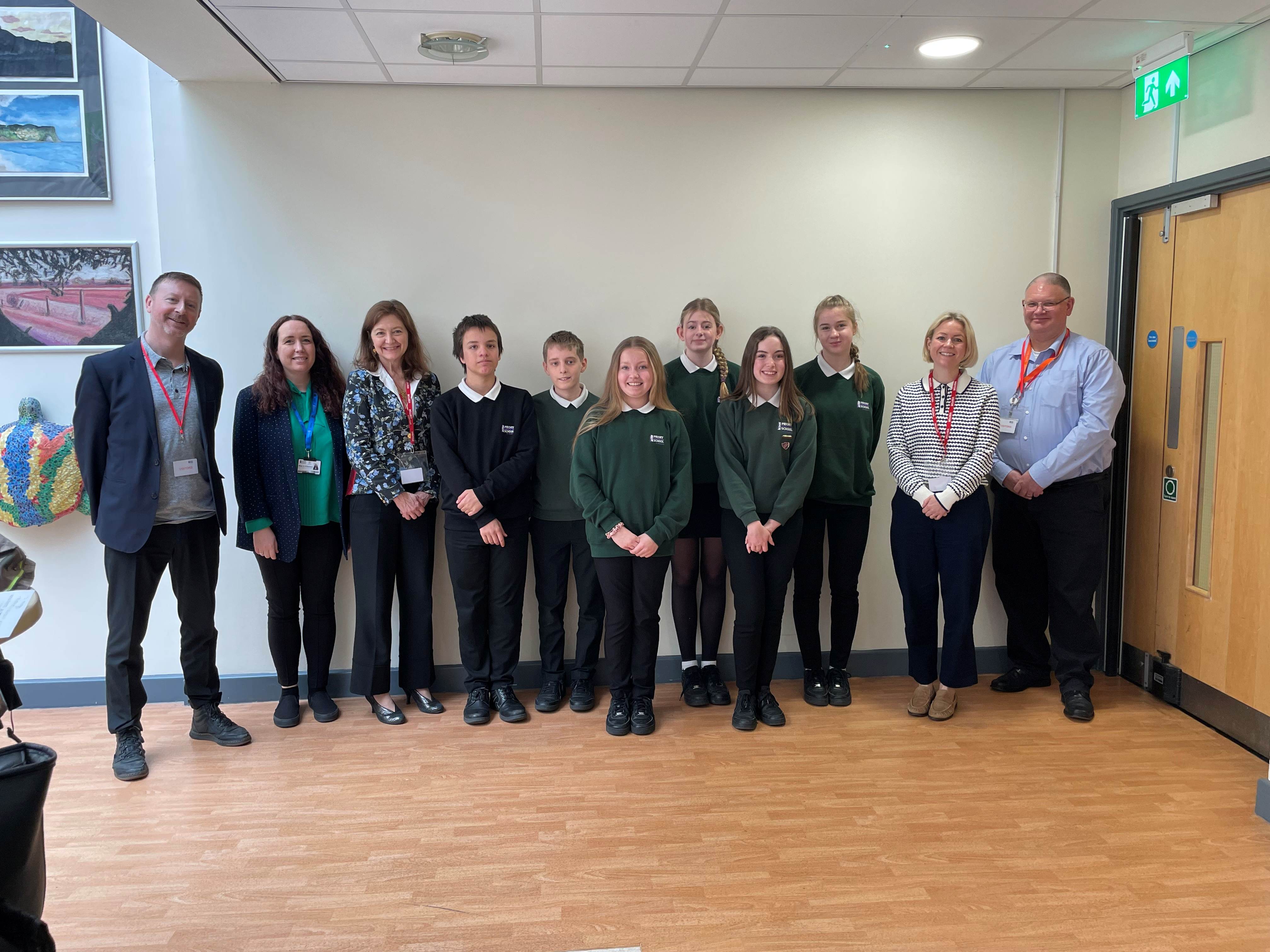
The following day the Vice-Chancellor travelled to North Somerset for a visit to Priory Community School, part of an Academy Trust in Worle, near Weston-super-Mare. Mike Nicholson led a school assembly for year 11 students. Later that morning, Xanthe Robertson, Access and Recruitment Officer of Trinity Hall, Cambridge, led assemblies for 1,500 students in Years 7 through to 10.
The Vice-Chancellor and colleagues were interviewed by members of a student news team named after the journalist Jill Dando, who grew up in Worle. The visitors noted that among the school’s notable alumni was Stephen Jenkins, current Professor of Physical & Computational Surface Chemistry at Cambridge.
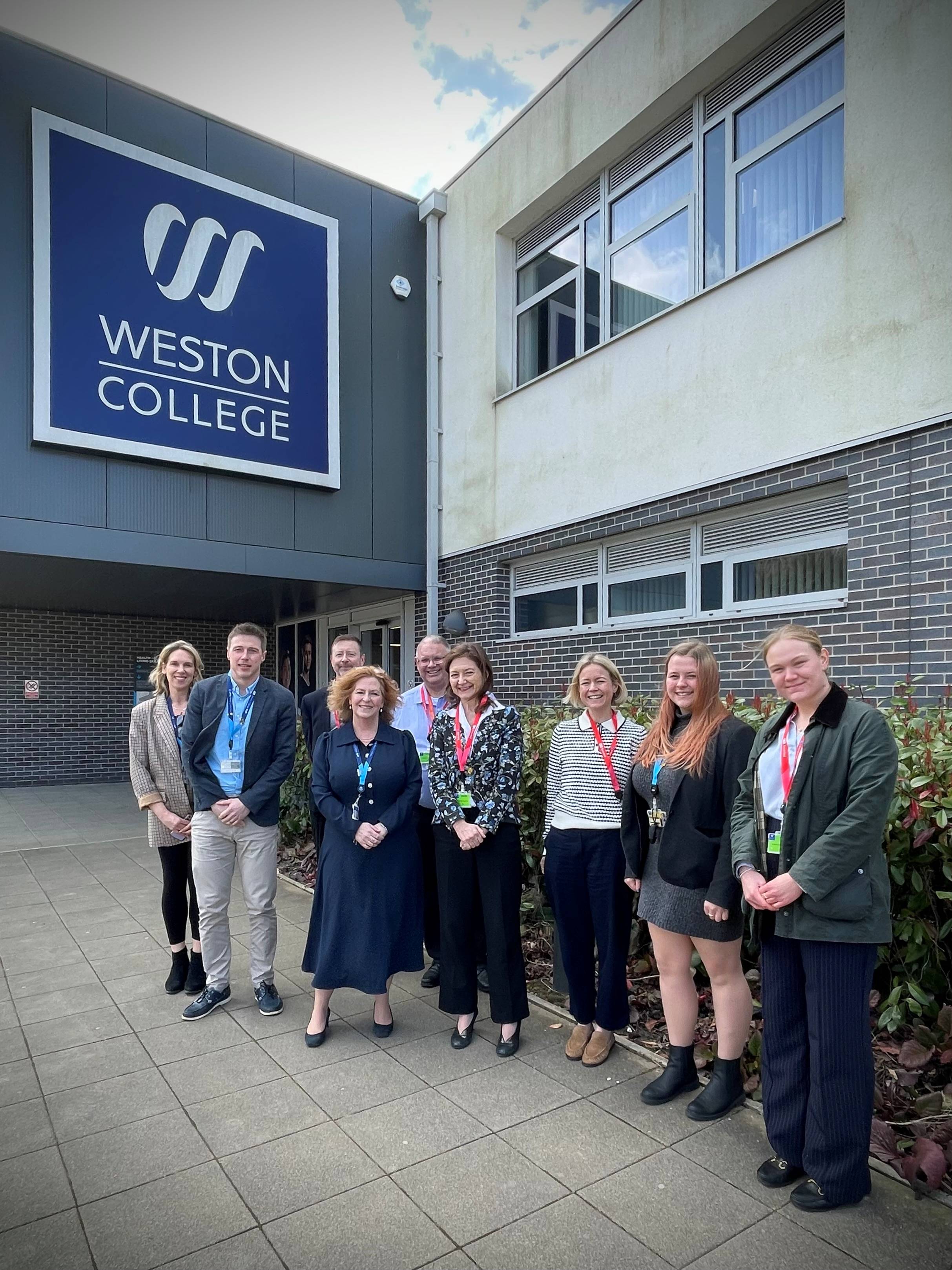
The next stop was Weston College, a further and higher education College in Weston-super-Mare that provides education and vocational training to students from the age of 14 through to adulthood. There the group met Sixth Form students to hear about their aspirations.
The final leg of the journey took the Cambridge delegation to St Bede’s Catholic and Sixth Form College in Bristol. The school is part of the HE+ network, through which the University of Cambridge and Colleges work together with schools FE establishments across the country to encourage applications from talented students.
Reflecting on her visit, the Vice-Chancellor said: “Travelling to the South West allowed me to learn more about the region and to understand some of the barriers to aspiration and attainment that prevent bright students from pursuing higher education. The students we met were impressive. Their teachers’ commitment to supporting their educational journey is outstanding. I hope that the outreach partnerships between the University, the Colleges and local schools will help us attract talented students to Cambridge, and will more generally encourage them to consider going to university.”
This visit to the South West followed the Vice-Chancellor’s trip to Rochdale, Manchester and Liverpool a year ago and her visit to Peterborough in the autumn of 2024.
The Vice-Chancellor, Professor Deborah Prentice, has led a delegation to Devon, North Somerset and Bristol. It was the first time a serving Cambridge Vice-Chancellor had travelled to the region in an official capacity to engage with local schools and alumni.
The students we met were impressive Professor Deborah Prentice
The text in this work is licensed under a Creative Commons Attribution-NonCommercial-ShareAlike 4.0 International License. Images, including our videos, are Copyright ©University of Cambridge and licensors/contributors as identified. All rights reserved. We make our image and video content available in a number of ways – on our main website under its Terms and conditions, and on a range of channels including social media that permit your use and sharing of our content under their respective Terms.
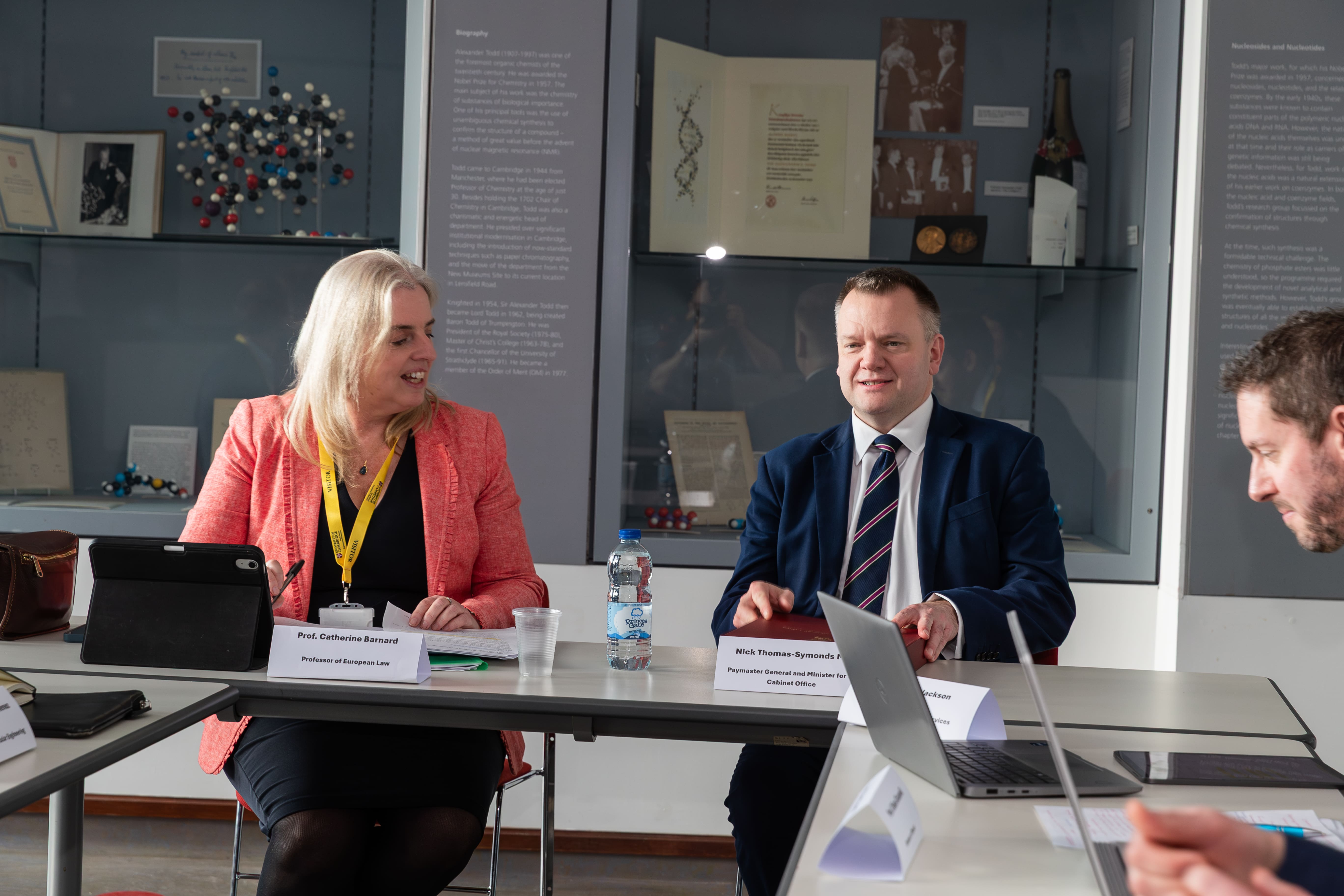
Paymaster General visits Cambridge to see success of EU research funding
The visit provided the Minister with an opportunity to meet with senior academics to discuss the success of EU funding streams and collaboration with EU institutions, and how this has enabled decisive breakthroughs at Cambridge.
Professor Erwin Reisner, Professor of Energy and Sustainability, greeted the Minister at the Yusuf Hamied Department of Chemistry and demonstrated a history of the Chemistry Department’s scientific breakthroughs, before welcoming him to the Reisner Laboratory. During their tour of the Laboratory, Mr Thomas-Symonds also met with Professor Reisner’s team of researchers, some of whom are in receipt of funding from the EU’s prestigious Marie Curie postdoctoral fellowship programme.
Professor Reisner, who has a successful history of securing ERC and Horizon funding awards, then introduced his own work, which focuses on the development of concepts to make fuels, chemicals and plastics from the greenhouse gas carbon dioxide.
Mr Thomas-Symonds also received an insight into their research through a series of demonstrations. PhD student Beverly Low supervised him in the Lab’s glovebox, preparing a sample for the solar reforming of biomass waste. Her colleague Andrea Rogolino showed how the team use sunlight to produce hydrogen from biomass waste.
Professor Erwin Reisner said: “The Minister showed great talent in the lab - he handled a glovebox very well and prepared a sample to produce hydrogen from biomass using solar energy. The visit provided us an opportunity to emphasise the importance of a close alliance with our friends and colleagues in Europe.”
After his tour of the Reisner Lab, the Minister attended a roundtable discussion with Cambridge ERC grant-holders and University leaders. He was joined by academics from across disciplines and heard from those in receipt of funding from variety of EU funding streams.
The Minister spoke to Professor Chiara Ciccarelli (Professor of Physics), Professor Erwin Reisner (Professor of Energy and Sustainability), Professor Marcos Martinón-Torres (Pitt-Rivers Professor of Archaeological Science) and Professor David Fairen-Jimenez (Professor of Molecular Engineering and co-founder of successful Cambridge spinouts).
The roundtable was Chaired by leading Professor of EU Law, Professor Catherine Barnard, and joined by the University’s Director of Research Services, Dr Andrew Jackson.
Following his visit to the Department of Chemistry, the Minister delivered The Mackenzie-Stuart Lecture, at the University’s Centre for European Legal Studies.
Nick Thomas-Symonds MP, the Paymaster General and Minister with responsibility for EU relations, visited Cambridge on Thursday 13 March.
Photo credit: Nick Saffell / Cambridge University
The text in this work is licensed under a Creative Commons Attribution-NonCommercial-ShareAlike 4.0 International License. Images, including our videos, are Copyright ©University of Cambridge and licensors/contributors as identified. All rights reserved. We make our image and video content available in a number of ways – on our main website under its Terms and conditions, and on a range of channels including social media that permit your use and sharing of our content under their respective Terms.
Make Indian Sign Language official language and open more schools for deaf and hard-of-hearing students, study advises
“Many thousands of children who are deaf or hard-of-hearing are missing out on school in India,” said Dr Abhimanyu Sharma, from Cambridge’s Faculty of Modern & Medieval Languages & Linguistics, the study’s author. “This has a huge impact on their wellbeing and life chances.”
“One of the main reasons for this very high dropout rate is that their schools do not offer education in sign language.”
Dr Sharma’s study, published today in Language Policy, explains that sign language continues to be ‘shunned’ in most Indian schools because it is still stigmatised as a visible marker of deafness. But, he argues, the alternative preferred by many schools, ‘oralism’ harms the school attainment of deaf students.
“Outside of India, ‘oralism’ is widely criticised but the majority of schools in India continue to use it,” Dr Sharma says. “Gesturing is not sign language, sign language is a language in its own right and these children need it.”
“When I was in primary school in Patna, one of my fellow students was deaf. Sign language was not taught in our school and it was very difficult for him. I would like to support the charities, teachers and policymakers in India who are working hard to improve education for such students today.”
Dr Sharma acknowledges that the Indian Government has taken important steps to make education more inclusive and welcomes measures such as the establishment of the Indian Sign Language Research and Training Centre in 2015. But, he argues, far more work is needed to ensure that DHH students receive the education which they need and to which they are legally entitled.
Sharma calls for constitutional recognition for Indian Sign Language (ISL) as well as recognition of ISL users as a linguistic minority. Being added to India’s de facto list of official languages would direct more Government financial support to Indian Sign Language.
“Central and state governments need to open more schools and higher education institutes for deaf and hard-of-hearing students,” Sharma also argues.
“In the whole of India, there are only 387 schools for deaf and hard-of-hearing children. The Government urgently needs to open many more specialist schools to support the actual number of deaf and hard-of-hearing children, which has been underestimated.”
He points out that deaf and hard-of-hearing people were undercounted in India’s last census because of the use of problematic terminology. The 2011 census reported around 5 million deaf and hard-of-hearing people in the country but in 2016, the National Association of the Deaf estimated that the true figure was closer to 18 million people.
Sharma also highlights the need for more higher education institutions for these students as there are very few special colleges for them, such as the St. Louis Institute for Deaf and Blind (Chennai, Tamil Nadu). He also calls for an increase in the number of interpreter training programs available across Indian universities.
Dr Sharma advises central and state governments to conduct regular impact assessments of new policy measures to ensure that they are improving inclusion for deaf and hard-of-hearing people.
He also calls on the government to invest in research to support more targeted approaches to teaching and learning for DHH students, and to support public awareness campaigns to tackle biases and negative social attitudes towards deafness.
Dr Sharma’s study examines developments in Indian legislation and policy relating to DHH people since the 1950s. He highlights the fact that parliamentary debates in the Upper House about DHH people declined from 17 in the 1950s, to just 7 in the 1990s, before rising to 96 in the 2010s.
India’s language policy requires pupils to learn three languages at the secondary stage of schooling. Given the problematic nature of the three-language formula for deaf students, the 1995 Persons with Disabilities Act rescinds this requirement for these learners and decrees that they should learn only one language.
The drawback of the 1995 Act, however, is that it does not mention the use of sign language and does not specify how language learning for such learners will be realised. Dr Sharma recognises that the Rights of Persons with Disabilities Act 2016 brought significant improvements but highlights the gap between decrees and implementation. The 2016 Act decrees that the Government and local authorities shall take measures to train and employ teachers who are qualified in sign language and to promote the use of sign language.
“In practice, India does not have enough teachers trained to support deaf and hard-of-hearing students, but I am positive that the country can achieve this,” Dr Sharma said.
ReferencesA. Sharma, ‘India’s language policy for deaf and hard-of-hearing people’, Language Policy (2025). DOI: 10.1007/s10993-025-09729-7
For the % of India’s deaf and hard-of-hearing children out-of-school in 2014, see National Sample Survey of Estimation of Out-of-School Children in the Age 6–13, Social and Rural Research Institute 2014
Around one in five (over 19%) of India’s deaf and hard-of-hearing children were out-of-school in 2014, according to a survey conducted for the Indian Government. A new study calls on the Government to address this ongoing educational crisis by recognising Indian Sign Language as an official language; rejecting ‘oralism’, the belief that deaf people can and should communicate exclusively by lipreading and speech; and opening more schools and higher education institutes for deaf and hard-of-hearing (DHH) students.
India does not have enough teachers trained to support deaf and hard-of-hearing studentsAbhimanyu SharmaYogendra Singh via UnsplashFemale students in an Indian classroom. Photo: Yogendra Singh via Unsplash
The text in this work is licensed under a Creative Commons Attribution-NonCommercial-ShareAlike 4.0 International License. Images, including our videos, are Copyright ©University of Cambridge and licensors/contributors as identified. All rights reserved. We make our image and video content available in a number of ways – on our main website under its Terms and conditions, and on a range of channels including social media that permit your use and sharing of our content under their respective Terms.
Cambridge and London hospitals to pioneer brain implants to combat alcohol and opioid addiction
The technique – known as deep brain stimulation – is to be trialled at Addenbrooke’s Hospital, Cambridge, and King’s College Hospital, London. The team behind the Brain-PACER: Brain Pacemaker Addiction Control to End Relapse study is currently recruiting individuals with severe alcohol or opioid addiction who are interested in taking part.
Deep brain stimulation (DBS) is a neurosurgical procedure that delivers ongoing stimulation to the brain. DBS acts as a brain pacemaker to normalise abnormal brain activity. It is well-tolerated, effective and widely used for neurological disorders and obsessive compulsive disorder.
Although there have been several proof-of-concept studies that suggest DBS is effective in addictions, Brain-PACER – a collaboration between the University of Cambridge, Kings College London and the University of Oxford – is the first major, multicentre study to use DBS to treat craving and relapse in severe addiction.
Chief Investigator Professor Valerie Voon, from the Department of Psychiatry at the University of Cambridge, said: “While many people who experience alcohol or drug addiction can, with the right support, control their impulses, for some people, their addiction is so severe that no treatments are effective. Their addiction is hugely harmful to their health and wellbeing, to their relationships and their everyday lives.
“Initial evidence suggests that deep brain stimulation may be able to help these individuals manage their conditions. We’ve seen how effective it can be for other neurological disorders from Parkinson’s to OCD to depression. We want to see if it can also transform the lives of people with intractable alcohol and opioid addiction.”
The primary aim of the Brain-PACER study is to assess the effects of DBS to treat alcohol and opioid addiction in a randomised controlled trial study. Its mission is twofold: to develop effective treatments for addiction and to understand the brain mechanisms that drive addiction disorders.
DBS is a neurosurgical treatment that involves implanting a slender electrode in the brain and a pacemaker under general anaesthesia. These electrodes deliver electrical impulses to modulate neural activity, which can help alleviate symptoms of various neurological and psychiatric disorders.
Keyoumars Ashkan, Professor of Neurosurgery at King’s College Hospital and the lead surgeon for the study, said: “Deep brain stimulation is a powerful surgical technique that can transform lives. It will be a major leap forward if we can show efficacy in this very difficult disease with huge burden to the patients and society.”
During surgery, thin electrodes are carefully placed in precise locations of the brain. These locations are chosen based on the condition being treated. For addiction, the electrodes are placed in areas involved in reward, motivation, and decision-making.
Harry Bulstrode, Honorary Consultant Neurosurgeon at Cambridge University Hospitals NHS Foundation Trust and Clinical Lecturer at the University of Cambridge, said: "We see first-hand how deep brain stimulation surgery can be life-changing for patients with movement disorders such as Parkinson’s disease and essential tremor. Thanks to this trial, I am now hopeful that we can help patients and their families – who have often struggled for years – by targeting the parts of the brain linked to addiction."
Dr David Okai, Visiting Senior Lecturer from the Institute of Psychiatry, Psychology & Neuroscience, King’s College London, added: “DBS is safe, reversible and adjustable, so it offers a flexible option for managing chronic conditions. We hope it will offer a lifeline to help improve the quality of life for patients whose treatment until now has been unsuccessful.”
Details on the trial, including criteria for participation and how to sign up, can be found on the Brain-PACER website.
The research is supported by the Medical Research Council, UK Research & Innovation.
People suffering from severe alcohol and opioid addiction are to be offered a revolutionary new technique involving planting electrodes in the brain to modulate brain activity and cravings and improve self-control.
We’ve seen how effective deep brain stimulation can be for neurological disorders from Parkinson’s to OCD to depression. We want to see if it can also transform the lives of people with intractable alcohol and opioid addictionValerie VoonShamir R, Noecker A and McIntyre CGraphic demonstrating deep brain stimulation
The text in this work is licensed under a Creative Commons Attribution-NonCommercial-ShareAlike 4.0 International License. Images, including our videos, are Copyright ©University of Cambridge and licensors/contributors as identified. All rights reserved. We make our image and video content available in a number of ways – on our main website under its Terms and conditions, and on a range of channels including social media that permit your use and sharing of our content under their respective Terms.
Spinning, twisted light could power next-generation electronics
The researchers, led by the University of Cambridge and the Eindhoven University of Technology, have created an organic semiconductor that forces electrons to move in a spiral pattern, which could improve the efficiency of OLED displays in television and smartphone screens, or power next-generation computing technologies such as spintronics and quantum computing.
The semiconductor they developed emits circularly polarised light—meaning the light carries information about the ‘handedness’ of electrons. The internal structure of most inorganic semiconductors, like silicon, is symmetrical, meaning electrons move through them without any preferred direction.
However, in nature, molecules often have a chiral (left- or right-handed) structure: like human hands, chiral molecules are mirror images of one another. Chirality plays an important role in biological processes like DNA formation, but it is a difficult phenomenon to harness and control in electronics.
But by using molecular design tricks inspired by nature, the researchers created a chiral semiconductor by nudging stacks of semiconducting molecules to form ordered right-handed or left-handed spiral columns. Their results are reported in the journal Science.
One promising application for chiral semiconductors is in display technology. Current displays often waste a significant amount of energy due to the way screens filter light. The chiral semiconductor developed by the researchers naturally emits light in a way that could reduce these losses, making screens brighter and more energy-efficient.
“When I started working with organic semiconductors, many people doubted their potential, but now they dominate display technology,” said Professor Sir Richard Friend from Cambridge’s Cavendish Laboratory, who co-led the research. “Unlike rigid inorganic semiconductors, molecular materials offer incredible flexibility—allowing us to design entirely new structures, like chiral LEDs. It’s like working with a Lego set with every kind of shape you can imagine, rather than just rectangular bricks.”
The semiconductor is based on a material called triazatruxene (TAT) that self-assembles into a helical stack, allowing electrons to spiral along its structure, like the thread of a screw.
“When excited by blue or ultraviolet light, self-assembled TAT emits bright green light with strong circular polarisation—an effect that has been difficult to achieve in semiconductors until now,” said co-first author Marco Preuss, from the Eindhoven University of Technology. “The structure of TAT allows electrons to move efficiently while affecting how light is emitted.”
By modifying OLED fabrication techniques, the researchers successfully incorporated TAT into working circularly polarised OLEDs (CP-OLEDs). These devices showed record-breaking efficiency, brightness, and polarisation levels, making them the best of their kind.
“We’ve essentially reworked the standard recipe for making OLEDs like we have in our smartphones, allowing us to trap a chiral structure within a stable, non-crystallising matrix,” said co-first author Rituparno Chowdhury, from Cambridge’s Cavendish Laboratory. “This provides a practical way to create circularly polarised LEDs, something that has long eluded the field.”
The work is part of a decades-long collaboration between Friend’s research group and the group of Professor Bert Meijer from the Eindhoven University of Technology. “This is a real breakthrough in making a chiral semiconductor,” said Meijer. “By carefully designing the molecular structure, we’ve coupled the chirality of the structure to the motion of the electrons and that’s never been done at this level before.”
The chiral semiconductors represent a step forward in the world of organic semiconductors, which now support an industry worth over $60 billion. Beyond displays, this development also has implications for quantum computing and spintronics—a field of research that uses the spin, or inherent angular momentum, of electrons to store and process information, potentially leading to faster and more secure computing systems.
The research was supported in part by the European Union’s Marie Curie Training Network and the European Research Council. Richard Friend is a Fellow of St John’s College, Cambridge. Rituparno Chowdhury is a member of Fitzwilliam College, Cambridge.
Reference:
Rituparno Chowdhury, Marco D. Preuss et al. ‘Circularly polarized electroluminescence from chiral supramolecular semiconductor thin films.’ Science (2025). DOI:10.1126/science.adt3011
Researchers have advanced a decades-old challenge in the field of organic semiconductors, opening new possibilities for the future of electronics.
It’s like working with a Lego set with every kind of shape you can imagine, rather than just rectangular bricksRichard FriendSamarpita Sen, Rituparno ChowdhuryConfocal microscopy image of a chiral semiconductor
The text in this work is licensed under a Creative Commons Attribution-NonCommercial-ShareAlike 4.0 International License. Images, including our videos, are Copyright ©University of Cambridge and licensors/contributors as identified. All rights reserved. We make our image and video content available in a number of ways – on our main website under its Terms and conditions, and on a range of channels including social media that permit your use and sharing of our content under their respective Terms.
Routine asthma test more reliable in the morning and has seasonal effects
Using real world data from 1,600 patients, available through a database created for speeding up research and innovation, the team also found that its reliability differs significantly in winter compared to autumn.
Asthma is a common lung condition that can cause wheezing and shortness of breath, occasionally severe. Around 6.5% of people over six years old in the UK are affected by the condition. Treatments include the use of inhalers or nebulisers to carry medication into the lungs.
The majority of asthma attacks occur at nighttime or early in the morning. Although this may in part be due to cooler nighttime air and exposure to dust mites and allergens, it also suggests that circadian rhythms – our ‘body clocks’ – likely play a role.
Researchers at the Victor Phillip Dahdaleh Heart and Lung Research Institute, a collaboration between the University of Cambridge and Royal Papworth Hospital NHS Foundation Trust (RPH), wanted to explore whether these circadian rhythms may also have an impact on our ability to diagnose asthma, using routinely performed clinical testing.
Typically, people with suspected asthma will be offered a spirometry test, which involves taking a deep breath in, then breathing out hard and fast for as long as possible into a tube to assess lung function. They will then be administered the drug salbutamol via an inhaler or nebuliser, and shortly afterwards retake the spirometry test.
Salbutamol works by opening up the airways, so a positive test result – that is, a difference in readings between the initial and follow-up spirometry tests – means that the airways must have been narrower or obstructed to begin with, suggesting that the patient could have asthma.
Cambridge University Hospitals NHS Foundation Trust (CUH) has recently set up the Electronic Patient Record Research and Innovation (ERIN) database so that researchers can access patient data in a secure environment to help in their research and speed up improvements in patient care.
Using this resource, the Cambridge team analysed data from 1,600 patients referred to CUH between 2016 and 2023, adjusted for factors such as age, sex, body mass index (BMI), smoking history, and the severity of the initial impairment in lung function.
In findings published today in Thorax, the researchers found that starting at 8.30am, with every hour that passed during the working day, the chances of a positive response to the test – in other words, the patient’s lungs responding to treatment, suggesting that they could have asthma – decreased by 8%.
Dr Ben Knox-Brown, Lead Research Respiratory Physiologist at RPH, said: “Given what we know about how the risk of an asthma attack changes between night and day, we expected to find a difference in how people responded to the lung function test, but even so, we were surprised by the size of the effect.
“This has potentially important implications. Doing the test in the morning would give a more reliable representation of a patient's response to the medication than doing it in the afternoon, which is important when confirming a diagnosis such as asthma.”
The researchers also discovered that individuals were 33% less likely to have a positive result if tested during autumn when compared to those tested during winter.
Dr Akhilesh Jha, a Medical Research Council Clinician Scientist at the University of Cambridge and Honorary Consultant in Respiratory Medicine at CUH, said that there may be a combination of factors behind this difference.
“Our bodies have natural rhythms – our body clocks,” Jha said. “Throughout the day, the levels of different hormones in our bodies go up and down and our immune systems perform differently, for example. Any of these factors might affect how people respond to the lung function test.
“The idea that the time of day, or the season of the year, affects our health and how we respond to treatments is something we’re seeing increasing evidence of. We know, for example, that people respond differently to vaccinations depending on whether they’re administered in the morning or afternoon. The findings of our study further support this idea and may need to be taken into account when interpreting the results of these commonly performed tests.”
Reference
Knox-Brown, B et al. The effect of time of day and seasonal variation on bronchodilator responsiveness: The SPIRO-TIMETRY study. Thorax; 12 March 2025; DOI: 10.1136/thorax-2024-222773
A lung function test used to help diagnose asthma works better in the morning, becoming less reliable throughout the day, Cambridge researchers have found.
Throughout the day, the levels of different hormones in our bodies go up and down and our immune systems perform differently. Any of these factors might affect how people respond to the lung function testAkhilesh JhaKoldunov (Getty Images)Man testing breathing function by spirometry - stock photo
The text in this work is licensed under a Creative Commons Attribution-NonCommercial-ShareAlike 4.0 International License. Images, including our videos, are Copyright ©University of Cambridge and licensors/contributors as identified. All rights reserved. We make our image and video content available in a number of ways – on our main website under its Terms and conditions, and on a range of channels including social media that permit your use and sharing of our content under their respective Terms.
Too Hot to Think Straight, Too Cold to Panic
Too Hot to Think Straight, Too Cold to Panic, a new report from Cambridge Judge Business School, BCG and the University of Cambridge’s climaTraces Lab argues that failing to invest comes with significant economic consequences.
Allowing global warming to reach 3°C by 2100 could reduce cumulative economic output by 15% to 34%. Alternatively, investing 1% to 2% in mitigation and adaptation would limit warming to 2°C, reducing economic damages to 2% to 4%. This net cost of inaction is equivalent to 11% to 27% of cumulative GDP—equivalent to three times global health care spending, or eight times the amount needed to lift the world above the global poverty line by 2100.
“Research on climate change impacts across all regions and sectors is expanding rapidly,” said Kamiar Mohaddes, an Associate Professor in Economics and Policy at Cambridge Judge Business School and Director of the climaTRACES Lab.
Read: The compelling economic case
Researchers from the University of Cambridge and Boston Consulting Group (BCG) offer a strong case for investing in climate mitigation and adaptation to avoid damage to the global economy.
Research on climate change impacts across all regions and sectors is expanding rapidlyKamiar MohaddesFront page of report
The text in this work is licensed under a Creative Commons Attribution-NonCommercial-ShareAlike 4.0 International License. Images, including our videos, are Copyright ©University of Cambridge and licensors/contributors as identified. All rights reserved. We make our image and video content available in a number of ways – on our main website under its Terms and conditions, and on a range of channels including social media that permit your use and sharing of our content under their respective Terms.
Cambridge Enterprise reports on continued growth and ambitious plans for the Cambridge Cluster
25 new spinouts were formed in 2023-24, taking Cambridge Enterprise’s total portfolio to 174 companies. In the same period, it has helped with the submission of more than 450 patent applications and more than 750 approvals for commercial and research licences.
New initiatives designed to further boost the number of high-potential spinouts emerging from the University, include the Technology Investment Fund (TIF) which during its first nine months has invested more than £2 million across 20 projects.
Founders, a Cambridge Enterprise programme to support University entrepreneurs, launched two new initiatives START 1.0 and SYNC in 2023-24. START 1.0 is an accelerator programme for very early-stage founders. Its first cohort included 11 companies, working to address global challenges ranging from climate change to healthcare with seven securing further funding within six months. SYNC is a new co-founder matching programme that will support, accelerate and scale new founders and companies from the University.
Dr Jim Glasheen, Chief Executive, Cambridge Enterprise, said: “Cambridge Enterprise remains committed to ensuring the innovations that spring from the University achieve their broader positive impact on society, and to our vital role in activating and enhancing the globally recognised Cambridge innovation ecosystem.”
Dr Diarmuid O’Brien, the University’s Pro-Vice-Chancellor for Innovation, added: “Cambridge Enterprise is crucial in translating the University’s research into positive social and economic change. From the full spectrum of innovation services that it provides for the University to its critical role in enabling transformational impact from University research, Cambridge Enterprise sets the standard for university innovation.”
Reflecting on the success of Cambridge Enterprise's innovation activities, its Chair, Ajay Chowdhury, said: “Cambridge Enterprise is in an incredibly strong position, with consultancy and research tools revenues at an all-time high, new initiatives to accelerate innovation and spinout formation, record levels of venture investment and great achievements for our portfolio companies.”
In partnership with the University and Cambridge Innovation Capital, Cambridge Enterprise leads Innovate Cambridge, an inclusive, ambitious innovation roadmap for Cambridge to encourage collaboration and action to help Cambridge realise its potential as a globally leading cluster. In October 2024, a ten-year plan for the city and region was unveiled at the Innovate Cambridge Summit, attended by over 400 leaders.
Read Cambridge Enterprise's Annual Review 2024
In its 2024 Annual Review, Cambridge Enterprise, the University’s innovation arm, reports significant growth across a wide range of activities supporting the translation of University research into societal benefit and helping Cambridge realise its potential as a globally leading cluster.
Cambridge Enterprise is crucial in translating the University’s research into positive social and economic change.Dr Diarmuid O’Brien, Pro-Vice-Chancellor for Innovation, University of CambridgeUniversity building
The text in this work is licensed under a Creative Commons Attribution-NonCommercial-ShareAlike 4.0 International License. Images, including our videos, are Copyright ©University of Cambridge and licensors/contributors as identified. All rights reserved. We make our image and video content available in a number of ways – on our main website under its Terms and conditions, and on a range of channels including social media that permit your use and sharing of our content under their respective Terms.
Cambridge men’s rugby team achieve the 3-peat in a day of mixed fortunes at The Varsity Matches
The men’s match saw Cambridge open the scoring with a fifth-minute penalty from George Bland (King’s), but Oxford responded with two tries, both converted, to establish a 21-6 lead. Despite the early setback, Cambridge rallied before halftime with tries from Matt Riddington (St Edmund’s) and Alex Christey (St John’s), both converted by Bland, to narrow the gap to 21-18.
Oxford extended their lead early in the second half but Cambridge refused to relent. A try from Ryan Santos (Jesus), followed by a decisive score from Luke John (Emmanuel), turned the tide in Cambridge’s favour. Bland’s conversion and a late penalty sealed a dramatic 35-28 victory, marking the Light Blues’ third consecutive Varsity Match win.
The women’s match proved to be a tougher challenge and despite a valiant defensive effort, the Light Blues were unable to contain a strong Oxford side. The Dark Blues scored two early tries and added a third before halftime to give Oxford a 15-0 lead.
Cambridge showed renewed determination in the second half, with Zoe Wright (Clare) scoring a try after a quick tap penalty. Phoebe Jackson’s (Jesus) conversion brought the score to 15-7, but Oxford crossed the line twice more to secure a 27-7 victory for the Dark Blues. While the women’s team didn’t go home with the trophy their relentless tackling and commitment to the game earned them praise.
Congratulations to all four teams who competed on the day, their Coaches and everyone working behind the scenes. It was a day that demonstrated the spirit and determination that define University sports and The Varsity Matches.
Varsity women's matchCambridge men’s team:
Bland; Santos, John, Riddington, Andrew; Bottomley, Holdroyd; Collins, Gompels, Edwards, Beaumont, Kantolinna, Hughes, Christey, Tosa.
Replacements: Petty (Collins, 40), Hide (Holdroyd, 55), Allinson (Bottomley, 55), Jones (Beaumont, 55), Day (Santos, 77). Not used: Du Roy, Addai, Evans.
Cambridge women’s team:
Smith; Embil, Yau, Jackson, Chaoui; McGregor, Glazier; Jones, Warner, Heathfield, Harding, Wright, Millar, Martin, Brown.
Replacements: Haspel (McGregor, 31). Latimer (Harding, 40), Crozier (Martin, 40), Lord (Chaoui, 40), Ubom (Jones, 41), Weatherhogg (Heathfield, 71), Newton-Ingham (Smith, 74), Chadirchi (Warner, 79).
Cambridge University experienced a day of two halves at The Varsity Matches on Saturday 8 March, with the men’s team securing a thrilling 35-28 victory over Oxford University’s Dark Blues while the women’s side fell to a 27-7 defeat in a hard-fought contest at Saracens’ StoneX Stadium.
CURUFC
The text in this work is licensed under a Creative Commons Attribution-NonCommercial-ShareAlike 4.0 International License. Images, including our videos, are Copyright ©University of Cambridge and licensors/contributors as identified. All rights reserved. We make our image and video content available in a number of ways – on our main website under its Terms and conditions, and on a range of channels including social media that permit your use and sharing of our content under their respective Terms.